When the Rain Starts Mid-Roof: Why an Unfinished EPDM Section Must Be Protected

Roof replacements do not always happen under perfectly clear skies. Even when the forecast looks manageable, Ohio weather can change quickly—and when a roof is already opened up, every minute matters.
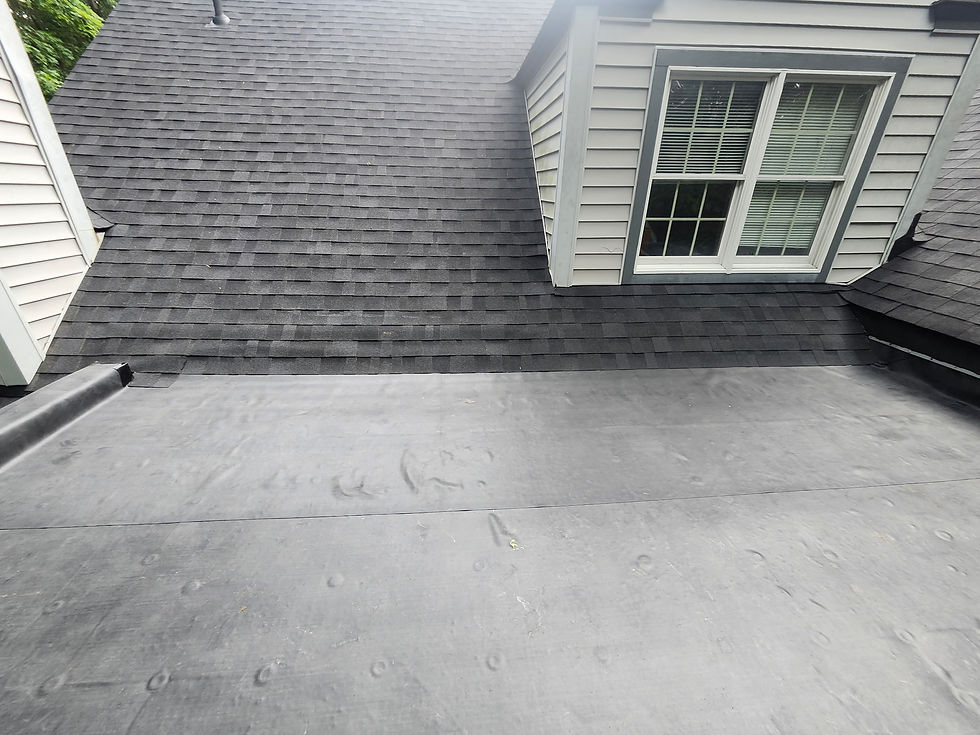
During a recent Synergy Roofing & Construction project, our crew completed a full replacement of the home’s asphalt shingles. The roof also included a low-slope section that required an EPDM roofing system.
While the team was working on that section, the rain suddenly began pouring.
Rather than leaving the unfinished area exposed, our crew worked through the downpour and became soaked from head to toe while making sure the roof was covered, secured, and protected. They returned the following day, once conditions allowed, to properly finish the EPDM installation.
What Is EPDM Roofing?
EPDM is a durable synthetic-rubber roofing membrane commonly used on flat and low-slope areas where traditional shingles are not appropriate.
Once fully installed, secured, and sealed, EPDM is made to provide long-lasting protection against rain, sunlight, and changing weather conditions. The concern during construction is not that finished EPDM cannot get wet—it is that the installation underneath and around it may not yet be complete.
Why Can’t an Unfinished Roof Be Left Exposed?
During a roof replacement, removing the old roofing materials can temporarily expose parts of the roof deck and underlying assembly. If heavy rain reaches those areas before they are protected, moisture may enter the home or become trapped within the new roofing system.
That can potentially lead to:
Wet roof decking or insulation
Water entering ceilings, walls, or attic spaces
Reduced adhesion between roofing materials
Moisture becoming trapped beneath the membrane
Delays while affected materials dry or are replaced
Future deterioration, staining, mold, or costly repairs
EPDM installation instructions generally require the surface beneath the membrane to be dry, clean, and free from standing water. Roofing insulation and fleece-backed materials may also need protection from moisture until the membrane is installed.
Why Moisture Matters During EPDM Installation
Depending on the specific roofing system, EPDM may be adhered, mechanically fastened, taped, flashed, or installed using a combination of methods.
Proper adhesion and sealing require correctly prepared surfaces. Rainwater, condensation, dirt, or trapped moisture can interfere with the bond between the membrane, adhesive, tape, and roof substrate. Manufacturer guidance specifies that surfaces receiving EPDM adhesives must be clean and dry.
That is why a responsible roofing crew does not simply continue applying adhesives and finishing details during a downpour. The immediate priority becomes creating a reliable temporary dry-in and protecting the open roof until the permanent installation can safely be completed.
What Our Crew Did
When the rain intensified during this project, our team shifted its focus from installation to protection.
The crew worked in the pouring rain to:
Cover the unfinished EPDM section
Prevent water from reaching the exposed roof assembly
Secure the temporary protection against the weather
Make sure the home was not left vulnerable overnight
Once the rain passed and the area was ready for proper installation, the team returned the following day to finish the EPDM section correctly.
It was not the easiest or driest day on the job—but protecting the homeowner’s property came first.
Roofing Is About More Than Installing Materials
Quality roofing is not only about how the finished roof looks. It is also about how the contractor handles unexpected problems along the way.
Weather changes. Materials behave differently under different conditions. Plans sometimes have to be adjusted. An experienced crew understands when it is safe to continue, when work must stop, and how to protect the home until conditions improve.
At Synergy Roofing & Construction, we take that responsibility seriously. When a roof is opened, we do not leave the homeowner exposed. We do what is necessary to protect the property and return to finish the job properly.
Rain or shine, protecting the home remains the priority.




Comments